

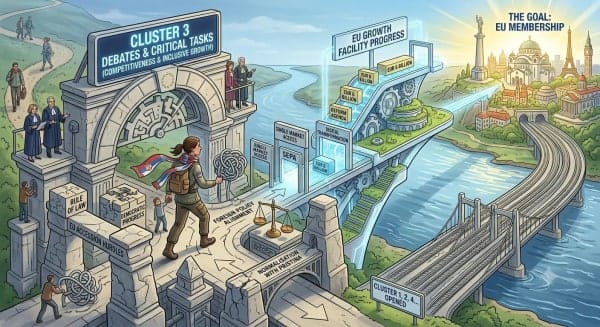
Serbia Navigates EU Accession Hurdles Amid Cluster 3 Debates and Growth Facility Progress
Serbia’s path toward European Union membership is navigating a complex geopolitical landscape in mid-2026, marked by economic progress under EU support mechanisms alongside ongoing hurdles in formal accession negotiations.
Debate Over Cluster 3 Opening
In mid-2026, discussions intensified in Brussels following the European Parliament's review of progress in Serbia. While the European Commission proposed opening Cluster 3 (Competitiveness and Inclusive Growth) following preliminary legislative adjustments, the initiative encountered hesitation from several EU member states—most notably the Netherlands—citing persistent concerns over rule of law, judicial independence, and foreign policy alignment.
EU Reform and Growth Facility
Despite stagnant negotiation chapters, financial and structural integration continues under the EU Growth Plan for the Western Balkans. In July 2026, Serbia officially submitted its fourth payment request to the European Commission under the Reform and Growth Facility. This funding framework directly links financial disbursements to verifiable structural reforms, maintaining operational momentum even as political accession milestones move at a slower pace.
Geopolitical Balancing Act
Belgrade continues to pursue multi-vector diplomatic relations while retaining EU membership as a strategic priority. Recent developments—including high-level talks with Ukraine in August 2026 to enhance economic cooperation and advance prerequisite steps for WTO and EU standards—highlight Serbia's ongoing effort to balance European commitments with its broader regional interests.